Showing posts with label Sports World Nostalgia. Show all posts

Sports World Nostalgia: Pet Sematary

>> Thursday

I really don't know what to think of this. Had the Patriots won Super Bowl XX, this would have been The Super Bowl Shuffle, and would be played all the time for Patriots teams today. As corny as The Shuffle may be, New England, the Patriots, and we" makes it look like Ode to Joy.

I fear that by resurrecting it out of its internet grave, I may have pulled a Pet Sematary, and given birth to a demon spawn. Sometimes....dead is better...


I thought of incorporating this into a more detailed post, but I really don't know where to begin.

Rhyming "AFC" with "NFC," the smarmy jackass in the argyle sweater who probably goes to Williams or Harvard or some snotty liberal arts college, the entire O-line in MTV caps, the horrible rhyming, the repetition of the chorus for the last HALF of the song...

or the fact that there was a time when music was JUST THIS BAD...
or the fact that everyone who greenlighted this at the time thought it was A GREAT IDEA...
No one stood up and said, "This is kinda stupid."

Read more...

Sports World Nostalgia: Scott Servais

>> Wednesday


While listening to the Cubs game today and hearing about Koyie Hill's stud day at the park, I couldn't help but be reminded of the legend that was Scott Servais. Despite his career .245 batting average, Scott Servais showed all the necessary traits of a quality team leader, guts, spunk, and git. But the thing most impressive was how he called a game. Afterall, who else could have helped Kevin Tapani win 19 games in 1998?

Right now, Scott Servais is currently the Director of Player Development for the Texas Rangers and you can bet that he will lead those troops to the top of the AL West sometime in the next 10 years.

Plus, he's from La Crosse, Wisconsin....which just reinforces his awesomeness.

Read more...

And they did it without the knucklepuck

>> Thursday


Read more...

Whoa now, don't go digging Joe Theismann's grave just yet

>> Saturday

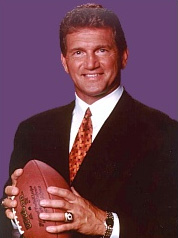
He may have lost his job on Monday Night Football, but Joe Theismann's ESPN career is stronger than ever... on ESPN Classic at least.

For those of you doing something useful with your Saturday afternoon, useless people around the country are currently tuned into ESPN Classic, which is showing an American Gladiators marathon all day today. If you're unfamiliar with the early, pre-Larry Csonka days of American Gladiors, Theismann was Mike Adamle's orignial color partner on the show. One need only watch five minutes of classic Gladiators to realize that this was the stage where Theismann was most in his element.

And for the record, Mike Adamle was just macking on Lace like nobody's business.

Read more...

Sports World Nostalgia: Khalid Reeves, John Wallace, Harold Arceneaux, Miles Simon, Hanno Mottola, Damon Key, Scoonie Penn, Damon / Toby Bailey, et al

>> Wednesday


We haven't done a SWN in a while, and the NCAA tourney is the perfect occasion to bust one out. Since I'm lazy, I'll do a one or two sentence blurb about each of the players listed in the title and encourage our readers to add any further memories of these players to the comments section.

Even more so, I encourage our readers reminisce about any other favorite forgotten college hoops stars. I especically encourage the participation of those readers who aren't so young as to absurdly consider stuff from the last ten years "nostalgic."

Khalid Reeves: Reeves was the other star guard, alongside Damon Stoudamire, on the 1994 Arizona Wildcats final four team. Though a member of "the Association" for a few years, the only thing I remember about his pro career was David Stern pronouncing his name "KHAL-id" on draft night.

John Wallace: Wallace was the star of the '95-'96 Syracuse squad that lost to the Delk- and 'Toine-led Kentucky Wildcats in the national championship game. The words "star" and "championship" would prove less applicable to his NBA career.

Harold "The Show" Arceneaux: Let's just copy and paste his player bio from the ABA's Utah Snowbears website: "The Show" is a two time Big Sky MVP and averaged 22 and 23 points per game respectively in 98-99 and 99-00 for the Wildcats. Arceneaux has been playing overseas, averaging 22 points per for Leiria most recently. Harold is best known for his NCAA Tournament showcase game versus North Carolina where he lit up the scoreboard for 36 points in an upset win for Weber State.

Miles Simon: The other guard besides Mike Bibby on the 1997 Arizona Wildcats national championship team. He helped screw everyone's bracket the next year when the 1-seeded 'Cats fell in the second round.

Hano Mottola: One of roughly eleven white players on the '97-'98 Utah Utes squad that lost to Kentucky in the national championship game, he was a fitting compliment to current NBAers Michael Doleac and Andre Miller. He also has an umlaut over one of the syllables in his name, but I forget which one. I think it's the first "o."

Damon Key: I had to mention at least one Marquette player from the Warriors era. Key was Jim McIlvaine's low post partner on the MU team that knocked off Jamal Mashburn's Kentucky Wildcats to reach the Sweet Sixteen in 1994. These days, Damon is a big tub of goo--I'd guess 300 pounds or so.

Scoonie Penn: Penn was Michael Redd's forgotten sidekick on the 1999 Ohio St. team that went to the Final Four. That team knocked off a St. John's team featuring Eric Barkley, who also almost made this list.

Damon Bailey: The quintessential Indiana point guard stereotype, Bailey was Calbert Cheaney's backcourt mate on the Indiana Hoosiers team that reached the Final Four in 1992--unoffically the year my most remote NCAA tourney memories begin. Needless to say, his game didn't--as they say--translate well to the pro game.

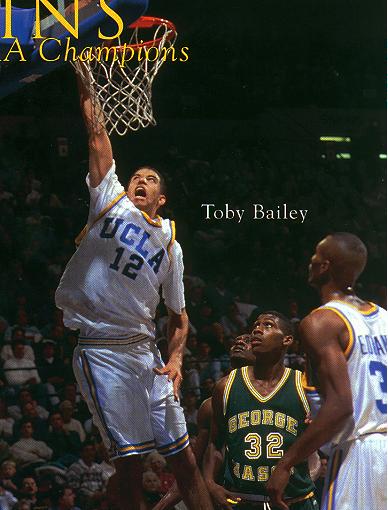
Toby Bailey: Though less famous than teammate Tyus Edney for lack of late-game heroics, Toby Bailey was truly the straw that stirred the drink on the 1995 UCLA Bruins national championship squad. Along with all his fellow '94-'95 starters (Edney, the O'Bannon boys, and George Zidek), Bailey currently plays in Europe.

Read more...

Sports World Nostalgia: Bobby Valentine

As bloggers--or writers (term used loosely) of any sort--it's sort of a minimal obligation that we do something hokey and festive on popular holidays. So to celebrate Valentine's Day, I thought I would pay tribute to a sports icon for whom the day is not named, but for whom it should be named: former MLB player and manager and Japanese League manager Bobby Valentine.

As a player, Valentine lasted eleven seasons in the bigs, appearing with five teams. After breaking in at the age of 19, "the Heartbreak Kid," as he should've been called, blossomed into a semi-regular player by the age of 22. As a member of the Dodgers in 1972, the versatile Valentine enjoyed his finest season, hitting .274 with 3 HR in 391 ABs while splitting time between 2B, 3B, SS, and OF.

Like most of us, Valentine had already seen his best days by the time he turned 23. By the mid-'70s, he'd been relegated to a sparingly-used utility man, a role he would continue to play until his retirement after the 1979 season.

During his playing career, Valentine garnered a reputation for being cagey, heady, and, above all, fond of watching games from the bench. So it was no surprise that baseballpeople quickly pegged the young Valentine as a future managerial candidate. By 1985, Valentine fulfilled this prophecy, becoming the interim manager of the Texas Rangers at the age of 35.

Valentine stuck with the Rangers, where he would oversee a string of 80ish-win seasons. His finest moment as Rangers manager came on June 11, 1990 when--just moments before the Rangers' game against the A's that evening--he told starting pitcher Nolan Ryan, "Hey, throw a good one tonight." Ryan obliged by pitching a no-hitter. It was undoubtedly Valentine's best single-game managerial perfomance of his young career. Never a one-trick pony, Valentine repeated the feat on May 1, 1991 when he told Ryan to no-hit the Blue Jays.

Valentine would remain with the Rangers until 1992 when he got his ass cahizzanned 86 games into the season.

By 1995, Valentine found himself itching to manage again, and, more principally, itching to earn a paycheck. That winter, Valentine accepted a job managing the Chiba Lotte Marines of the Japanese Pacific League. Despite the Marines' second-place finish that season, Valentine was fired due to personality conflicts and an admission that he picked his lineups from a hat when he gave up trying to learn his players' names.

The next season, Valentine was back in the majors as a coach with the Mets. He would find himself managing again before the 1996 finished when the Mets dumped manager Dallas Green with 31 games left. During his time with the Mets, Valentine's teams won back-to-back NL Wild Cards in 1999 and 2000, making the World Series the latter season and losing to the cross-town Yankees in front of lots of celebrities. What people will remember most about Valentine's Mets tenure, however, was his incognito appearance in the Mets' dugout after being ejected during a 1999 game (photo, top of page).

By 2002, the Mets had grown tired of not firing someone, and Valentine was released from his exile in Flushing Meadows. With nowhere else to turn, Valentine followed his heart back home to Japan, accepting his old job with Chiba Lotte for the 2003 season. He would win the Pacific League title with the Marines in 2005 and continues to manage there today.

Since going back to Japan, Valentine has crusaded for international competition among MLB teams and other countries' professional teams. Valentine was validated in his oft pooh-poohed assertions that Japanese League players could compete with MLB players when Japan won the inaugural World Baseball Classic last year on the strength of their calculated, stoic, Samurai-like, good-at-math, seaweed-digesting style, just as Valentine had predicted.

Whether or not Valentine ever makes it back to the majors, his legacy as a champion for the WBC and as a hilarious disguise artist is forever cemented in baseball lore. Also, his legacy as the inventor of the wrap is forever cemented in deli sandwich lore. But if you ask me, he's making that up. The filthy liar.

Anyway, we at YCS hope all of you had a wonderful Valentine's Day, and we hope when you curl up with that special someone tonight, you think of the man we honor on this day--former MLB manager Bobby Valentine. If not, we hope you think of Bobby the next time you're making love. And every time after that.

Read more...

Sports World Nostalgia: Bob Probert

>> Friday

With my going to the Hawks-Maple Leafs game tonight, I figured this would be the only appropriate time to discuss this glorious competitor, and promise it will be the last post on the Hawks for a while. Today we look back to the hallowed days of youth, when the Blackhawks were actually kind of decent, and towards the tail end of their 27-year playoff appearance streak. While all the pretty boys in class had Jeremy Roenick jerseys, because he was the star and scored all the goals, real fans' favorite Hawk growing up was Bob Probert.

Probert was probably the kind of player Happy Gilmore would have been if he had made it into the NHL. He couldn't really score (Only 84 goals in a 16-year career in the NHL with the Chicago Blackhawks and Detroit Red Wings) But he could beat the living fuck out of people in a way that would make Carmelo Anthony run away like a scared little girl.

...well, like MORE of a scared little girl than he already is.

Probert was a true renaissance man. The kind of well-rounded athlete that makes the perfect hockey player. Probert was an expert at many skills, including fighting, brawling, sparring, knockin' heads, beating the fuck out of people, and occasionally, stepping in as his team's enforcer when needed. His versatility impressed fans of all ages for almost 20 years. Probert spent 3574 minutes in the penalty box in his career, an average that comes out to almost 2 trips to the sin bin every game. With stats like that, we can only assume that he'd beat the living hell out of Bob Barker too. His retirement in 2002 brought wistful memories from hockey fans, and wailing sobs from hospitals and morgues within a 20 minute drive of NHL arenas.

Here's to you, Probert. Thanks to you, we can all see the ridiculous double standard in how sports media portrays fighting during a game for when the players involved are white, blue-collar, working class heroes and when they're "out of control" (ie: black).

Read more...

Sports World Nostalgia: Rick Wilkins

>> Wednesday

For those Cubs fans who came of baseball age in our time, perhaps one of the first memories you have of the game is the "home run chase, but not the one between Sammy and Mac. I'm talking about the one between Sammy and Wilk. In 1993, the race to lead the 84-78 Cubs in homers. This was important to young fans of a team who finished in 4th place in the old NL East, and needed something to salvage an otherwise broken season.

Today we look back on that magical summer, when the Cubs finished 13 games out of first place, (but under today's 6-division format, would still have been in contention for a Division Title untill the middle of the last week of the season.)

1993 was also the greatest year of Rick Wilkins' life. He hit .303, which might have sounded impressive were it not for his OBP of .376. At the tender age of 26, and in his third season behind the plate for the Northsiders, things were looking up for the young Wilkins, who untill today I did not know that his Baseball Reference page is in fact sponsored by....us. In 1993, while the rest of the world was paying attention to the Brady Bill and the dissolution of Czechoslovakia, little 8 and 9 year olds were questioning who would lead the Cubs in home runs.

It seemed a storyline fit for a future baseball historical biopic. Perhaps someday it will be considered to be ranked alongside "Pride of the Yankees," or at least "Major League III." Two of the Cubs young talents battled it out for slugging supremacy in front of...I guess some fans (the Cubs finished 7th of 14 NL teams in attendance). The scrappy Wilkins and the charistmatic Sosa wowed the crowds mildly en route to hitting 30 and 33 home runs respectively. After realizing that he only beat Wilkins by three homers, Sosa immediately began a strict regime of strenuous exercise, healthy diet, and Flintstones vitamins, and not "illegal drugs" or "corked bats."

After that magical season, Wilkins was never able to recapture his prior form. He left the Cubs in 1995 for the artificially greener pastures of the Houston Astrodome. He ended up with a career batting average of .244 and an OPS of .742 during stints with the Cubs, Astros, Giants, Mariners, Mets, Dodgers, Cardinals and Padres. He retired amid no fanfare in 2001, a shadow of his former, flukish self.

He may no longer have his pride, or the health of his knees, or the money, or the women that undoubtedly questioned who he was in 1993 when he introduced himself, only to be bedded by him after he told them he was tied with Sammy Sosa for the team lead in homers.

But he'll always have 1993.

Read more...

Sports World Nostalgia: B.J. Armstrong

>> Friday

When discussion comes up to the legends of the 1990s Chicago Bulls Dynasty, the same names always come up. Michael, Scottie, Rodman, Horace Grant, Bill Cartwright, even Tony "The Croatian Sensation" Kukoc and Steve "The little white guy who could" Kerr get mentioned with wistful tones as sports fans everywhere remind themselves of the glory days of a time that may not have actually existed where "teamwork," "grit," "hustle," and "humility" reigned supreme.

But while talking about his Airness or the little white guy who could, many people forget about the little black guy who could. That man, is Benjamin Roy Armstrong, Jr. (Initials, BRA, but more commonly known as just "BJ.")

Armstrong was born in Vinnie Bergl's favorite rust belt town of Detroit, Michigan. He later went on to play his college ball at the University of Iowa. He was drafted by the Bulls with the 18th pick in the 1989 draft, 8 spots ahead of Vlade Divac, but 6 picks after Mookie Blaylock, and only one pick after Shawn Kemp.

BJ never really took control of the spotlight, largely because his 6'2" 175 pound body was often mistaken for another player's shadow , and the spotlight moved on. However, Armstrong played an integral role in the Bulls' first three NBA championships, averaging just over 11 points per game in the playoffs during those years.

In 1994, with Michael Jordan gone, BJ had his breakout season, scoring a career high 14.4 ppg, and was rewarded for his efforts with a trip to Minneapolis for the All-Star Game where his 11 points helped lead Mark Price, Mookie Blaylock, Dominique Wilkins, Derrick Coleman, and Scottie Pippen's red shoes to a 127-118 victory over the West. It was Armstrong's only All-Star Game appearance.

Despite his continued efforts and achievements for the team that drafted him, a rift grew between BJ and the Bulls, perhaps because he was only making $620,000 a year. After all, Michael Jordan made $4 million in 1994 without playing one minute, and BJ was making about half of Will Perdue's salary that year. The tension came to a head after the 1995 season, when the Bulls, apparently unable to afford BJ Armstrong anymore, let their team's third-leading scorer go in the expansion draft to the Toronto Raptors. While BJ never got to fly in the Raptors plane , he was spared the fate of having to wear one of the most ridiculous jerseys in sports history.

Traded from the Raptors to the Golden State Warriors, BJ finally started raking in the dead presidents as his salary ballooned to over $2 million. However, as his salary doubled, his production was halved....then halved again. Like a piece of Uranium-238 in the core of a nuclear bomb, BJ Armstrong's usefulness was steadily deteriorating with time. He played with the Warriors, Charlotte Hornets, and Orlando Magic with minimal success, untill he played his last NBA game in 2000 with the Chicago Bulls. Armstrong averaged 7.4 points per game that year, putting the final mark of success on the franchise, as he led Fred Hoiberg, Rusty Larue, and Corey Benjamin to a 17-65 record.

So today, we salute you BJ Armstrong. Not only do you have an awesome stage name if you want to enter the world of adult entertainment as a post-retirement venture, but if it weren't for you, it would have been "PAXSON! TO BE DOWN BY EIGHT OR SOMETHING LIKE THAT! YESSSSSSS!!!!!"

Read more...

Sports World Nostalgia: Walt Weiss

>> Tuesday

It’s been a few weeks since our last Sports World Nostalgia, so I figured I would revive it with one that is very appropriate for baseball’s postseason.

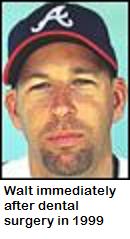
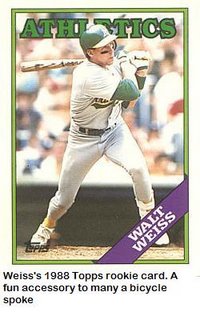
Walter William Weiss was born on November 28, 1963 in the swanky town of Tuxedo, NY to a family of tailors, cufflink makers, and penguins. As a child, Walt honed his baseball skills by swinging an old ivory tuxedo cane at a waded-up bowtie his brother Wilbur pitched to him in the warehouse of their father Woodrow’s tuxedo shop, where the two brothers learned the family craft of tuxedory.
By the age of eighteen, however, Weiss decided that the tuxedo business was not for him. He had blossomed into an excellent shortstop for the Tuxedo Central High Well-Dressed Penguins with Monocles and was receiving baseball scholarship offers daily. Also, the foreign tuxedo markets had begun to threaten his hometown’s long-standing economic base, glue-making (Tuxedo's local economy was very complex at the time), so Walt spurned his father’s wishes to continue the family business and instead attended the University of North Carolina.

As a member of the Tarheels, Weiss played like a man determined to have polished his last cufflink. By his sophomore season, Weiss’s slick fielding and solid bunting had earned him the starting shortstop position. During his senior season, Walt caught the attention of Texas Rangers scout Gus “Snarls” McAllister, a racist old coot who loved Weiss for his resemblance—both in name and appearance—to pre-desegregation era players. Unfortunately for McAllister, Weiss caught the attention of many other scouts for his ability to play baseball and was taken 11th overall in the June 1985 amateur draft by the Oakland Athletics.

In 1987, Weiss broke through with the A’s big club, where he would get a cup of coffee, a case of Bazooka Joe, a rookie minimum salary, and 26 at-bats. He appeared in a total of 16 games that year, hitting .462—ironically the highest batting average of his career by 180 points.

Though he could not replicate his gaudy average from ’87, Weiss had a successful rookie campaign in 1988, batting .250, belting out 3 homeruns, stealing 4 bases, and leading the A’s to 104 wins. With possible exception of the Brewers’ Don August (13-7 record, 3.09 ERA), the White Sox’ Dave Gallagher (.305 BA, 5 HR), the White Sox’ Melido Perez (12-10 record, 3.43 ERA), the Red Sox’ Jody Reed (.293 BA), and the Rangers’ Cecil Espy (.248 BA, 33 SB), Weiss easily posted the most impressive numbers of any American League rookie that season and earned himself the AL Rookie of the Year Award, edging out runner-up Brian Harvey (2.13 ERA, 1.04 WHIP, 17 SV) by a vote of 103 to 49.

Weiss’s A’s went on to win the AL West and play in the AL Championship Series that season, where they beat the Boston Red Sox in a four-game sweep to advance to the World Series.

Weiss’s first World Series game was one of the most famous in the history of baseball. Walt was standing at shortstop with two outs in the bottom of the ninth during Game 1 of the 1988 World Series when the Dodgers’ Kirk Gibson—battling two injured legs, a nagging thumb injury, prosthetic spine, severe nosebleed, and four bullet holes in his left shoulder—stroked a pinch-hit, two-run, game-ending homerun on an 0-2 slider from A’s closer Dennis Eckersley. Walt was still standing there moments later, as Dodgers’ manager Tommy Lasorda bowled his way toward Weiss to join his players in on-field celebration—a moment Weiss later recalled as “one of the scariest eighteen-and-a-half seconds I’ve ever experienced.”

The A’s went on to lose the ’88 World Series in five games. Immediately following Game 5, Weiss and Eckersley were rumored to have downed an entire handle of Cutty Sark whiskey in less than an hour, after which, according to outfielder Dave Henderson, “Walt was drunker than I’d ever seen him before. And Eck—that was the soberest I’d ever seen him.”

Weiss, and the A’s, bounced back and returned to the World Series the following season, meeting the San Francisco Giants in the first ever matchup between the two Bay Area franchises. The first game of the 1989 World Series also proved memorable, but for more tragic reasons. Just prior to the start of Game 1, a massive earthquake measuring 10.7 on the Richter scale struck the city of San Francisco, canceling the game—to the grave annoyance of A’s manager Tony LaRussa—and sending all of Candlestick Park to a frenzied evacuation.

For all of Weiss’s on-field accomplishments, his greatest heroics came in the moments following the quake. After evacuating the park with the rest of the players—long before the Japanese tourists in the stands were even told what an earthquake was—Weiss selflessly risked his own life to save those of two others. According to eyewitness and A’s pitcher Bob Welch, Weiss—still in full uniform and eye black—leapt a rapidly-parting lava-filled chasm to save a beagle puppy and Giants’ outfielder Kevin Mitchell, both of whom had ended up on the wrong side of a fault after pursuing of still-wrapped package of venison jerky they had spotted on a sidewalk slab.

The moment demonstrated both Weiss’s courage and his sportsmanship, two qualities that would define his career. According to Jose Canseco’s 2005 tell-all, Juiced: Wild Times, Rampant ‘Roids, Self-Promotion, and How I Once Banged Terry Steinbach’s Wife, Weiss repeatedly fought off Mark McGwire’s frequent and unsolicited attempts to inject him with steroids—sometimes with only a wooden cross to defend himself—throughout his time in Oakland.

Weiss’s A’s would return to the World Series one last time in 1990 to play the Cincinnati Reds. Unfortunately, a game of checkers gone-awry claimed Weiss’s left eye for the series, and the A’s, as a result, were swept in four games—thanks to the heroics of a short, squatty guy named Billy Hatcher who hit .750 for the series.

Weiss would spend two more years with the A’s, again returning to the ALCS in 1992. That November, Oakland would trade Walt to the expansion Florida Marlins for two players who would appear in a combined 54 games in their careers. Walt would spend most of 1993 toiling in misery alongside the likes of Dave Magadan, Chuck Carr, and later-beloved ESPN analyst Orestes Destrade for a team that would lose 98 games, or twenty more than Weiss had ever experienced at the major league level.

Weiss was rewarded for his patience in 1994 when he signed as a free agent with the Colorado Rockies. Not only would the signing give Walt the meaningless distinction of being the first ever player to play for both the Rockies and Marlins, it would offer him the opportunity to appear offensively adequate for the first time in his career, thanks to Denver’s thin, mountain air. Weiss, however, would not take advantage and continued to hit substandardly, finishing sixth in the league in outs.

Weiss would reach the postseason with Colorado the next year, but the Rockies—who made the postseason as the National League’s first-ever Wild Card—were swept by the Atlanta Braves.

Weiss spent two more seasons in Colorado before glomming onto the Braves’ gravy train as a free agent in November 1997. With Atlanta, Weiss would appear in three consecutive postseasons, including the 1999 World Series, where the Braves were swept by the New York Yankees.

At the end of the 2000 season, Weiss spit out his trademark wad of chaw for the last time. Walt finished his career with stats.

Walt’s legacy as a player throughout the late 1980s and 90s was a steady-handed, non-threatening whiteguy shortstop who had the luck of playing often in the postseason. Were he around today, however, Yankees fans would no doubt want to trade Alex Rodriguez and Jason Giambi to acquire his unselfish attitude and proven winning reputation.

So thanks for the memories, Walter William Weiss. URLs everywhere pay subtle tribute to you.

Read more...

Sports World Nostalgia: Mickey Tettleton

>> Thursday

After chastising Mike for overkill on this new feature, I'm gonna cave in and do my own. In fact, let's brand this "Sports Nostalgia Week" as an excuse. But seriously, in the future we'll have to do it on a rotating weekly basis or something so that we don't ruin it.

My first installment: Mickey Tettleton, a.k.a. "The Mick." (To the best of my knowledge, he's the first and only baseball player to have ever sported this nickname.)

Mickey Tettleton played parts of 14 seasons in the majors, most notably and productively with the Tigers and Rangers. He also spent time in Baltimore, where he would first make the All Star team, as well as in Oakland, where he toiled in obscurity.

As a young minor leaguer in the Oakland A's farm system, Tettleton became a prized prospect for his ability to both catch and hit over .200. Playing for the Kingston Klansmen of the Southern League, the young switch-hitter grabbed the eye of coaches and scouts, as well that of a young Toni Basil, who used Tettleton as inspiration for her 1983 chart-topping smash hit "Mickey." (True story according to an unnamed, possibly made-up source.)

Tettleton soon found himself in the majors with Oakland, where he would leave just in time to see the A's make three straight World Series appearances while he blossomed for a shit-hole Baltimore Orioles team. Mickey would leave Baltimore for Detroit after 1990 when Orioles backup catcher Chris Hoiles attempted his murder.

Over time, Tettleton built a reputation for his toughness. Year after year, Mickey valiantly braved the bruises and infertility of the catcher position until managers grew wary of his below-average defensive skills and began to play him anywhere else but catcher. In that time, however, he hit a bunch of homers and stuff. Here's his baseball reference page. You can read.

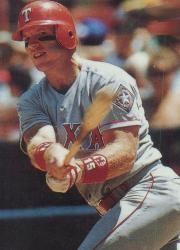
What we'll remember most about Tettleton, however, were his ridiculous batting stance--a limp-armed grip of the bat projecting all the focus of a surgical patient--and his ubiquitous jumbo wad of chewing tobacco. Both were pretty sweet.

Read more...

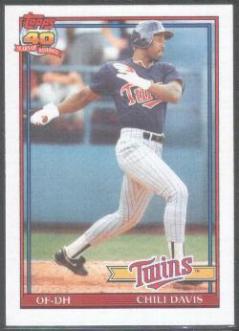
Sports World Nostalgia: Chili Davis

>> Wednesday

Inspired by a random FSN reference, I give you YCS's first regular feature: Sports World Nostalgia.
Whenever one of our staff members feels so inclined to bring up a random, often-forgot player from our past (no Michael Jordans or Wayne Gretzkys) find a picture of him, career stats, and let's appreciate some of the former stars that time has essentially swept under the rug.

Today's feature: Chili (Bowl) Davis


Chili was the poster-boy for consistency, playing 19 seasons in the majors. He had a career .274 batting average, .360 OBP, and .451 slugging. And until Chipper Jones passed him recently, Chili stood in third place for all-time home runs by a switch hitter with 350. Only Mickey Mantle (536) and Eddie Murray (504) have more, and they have way more. Davis stands 72nd overall in home runs.

He came up with the Giants, but back problems forced him into a DH role, and therefore into the American League, where he first played for the California Angels. What we probably remember him best for was his two years in Minnesota, specifically 1991, when he hit 29 home runs and went to the World Series, where he hit another two dingers to help the Twins win the championship. After Minnesota, he went back to the Angels, and like any good aging star, he wrapped his career up with the Yankees.
What you might not remember (neither Vinnie or I did) is that between Angels II and the Yankees Chili played a year in Kansas City, where he hit a career-high 30 home runs.

Well that's about it for ol' Chili Bowl. I tried to find out where he is now, and to the best of my knowledge, he is currently an analyst for ESPN. If anyone can confirm or update this information, please do.

P.S. The random reference on FSN: Chili Davis apparantly holds the title of hitter struck out the most times by Roger Clemens.

Read more...
NSAwins is a popular site for daily vegas sports odds including updated Vegas Super Bowl Odds and weekly NFL totals and odds during football season. Check out NSAwins during March Madness for FREE March Madness Brackets to Print and Expert Picks on the NCAA Tournament. NSAwins also offers HUGE 100% BetUs Bonus Code and BoDog Bonus Code sportsbook promos.
Online Casino Reports - Online Gambling Guide and Directory for casinos, poker and sports betting.

Get out of your yellow chairs and onto some treadmills to train like a pro.

Check out Casino Guide Canada for free NFL online betting picks and the best online casinos for Canadian and US players today!
USA Online Casino guides you not only to casino bonus, but odds of sportsbook for online sports betting. Try your luckiness today to enjoy gaming games on the internet.

  © Blogger template Webnolia by Ourblogtemplates.com 2009

Back to TOP